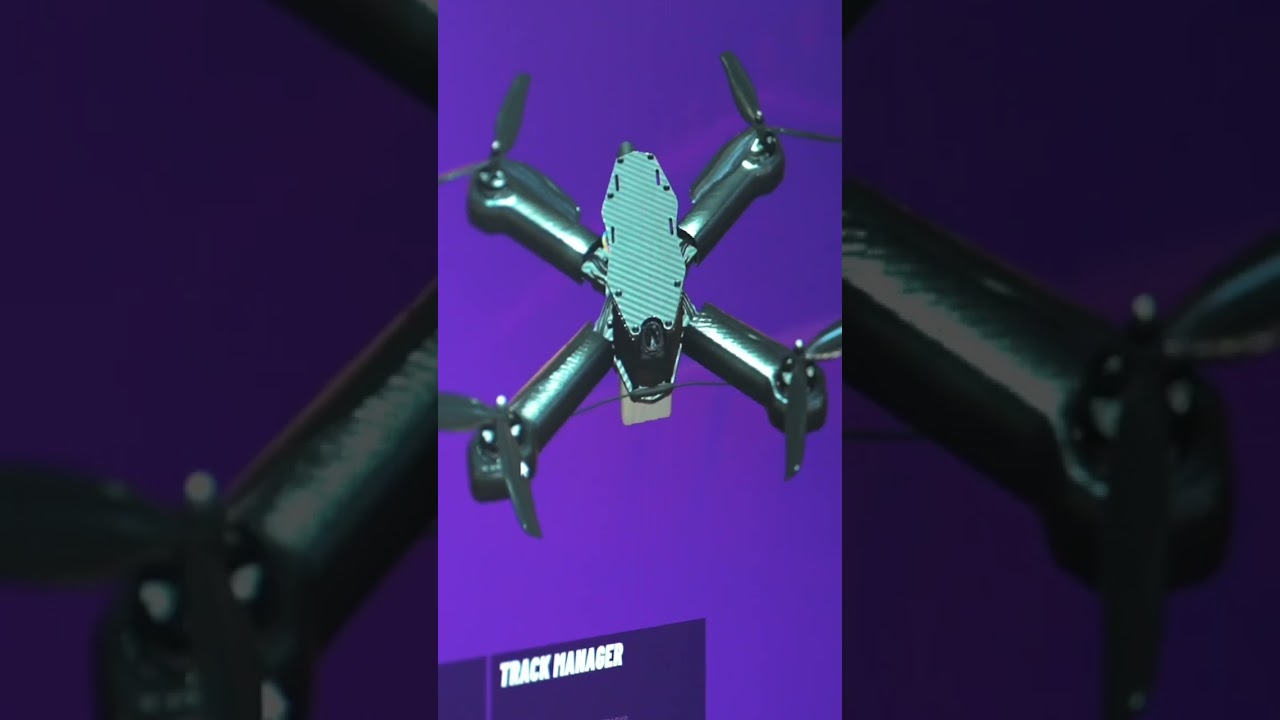

Phygital Drone Racing

Introducing Phygital Drone Racing
Phygital Drone Racing challenges teams to overcome the same challenge in the virtual and real world – unlike any other form of drone racing you’ve ever seen before. Teams have to excel in speed and precision across both worlds so it takes pinpoint accuracy, lightning reflexes, and nerves of steel. The result is a relentless, high-octane experience for competitors and fans alike.
Competition Format
Sixteen teams take part in the competition, which consists of a Qualification Stage, where teams compete in a time trial using a PC simulation of the main stage track, followed by a Main Stage, where teams race against each other on a physical track over 50 laps.
Teams
Each team has two athletes, known as pilots. During the main stage races, the first pilot starts from the ‘start area’ (where pilots control the drone that is racing) and the second pilot is based in the ‘pit stop area’ (where battery replacement and drone repairs are completed). Each pilot must complete 25 laps. Once the first pilot has completed that, the pilots switch over roles and swap places in the two areas.
Each team has a fixed allocation of 3 drones to complete the 50 laps.
Race Format
Progression is determined by an elimination system. Pilots fly the physical circuit with a drone against the time.
Each match consists of 50 laps. Each team’s athletes must complete 25 laps per pilot.
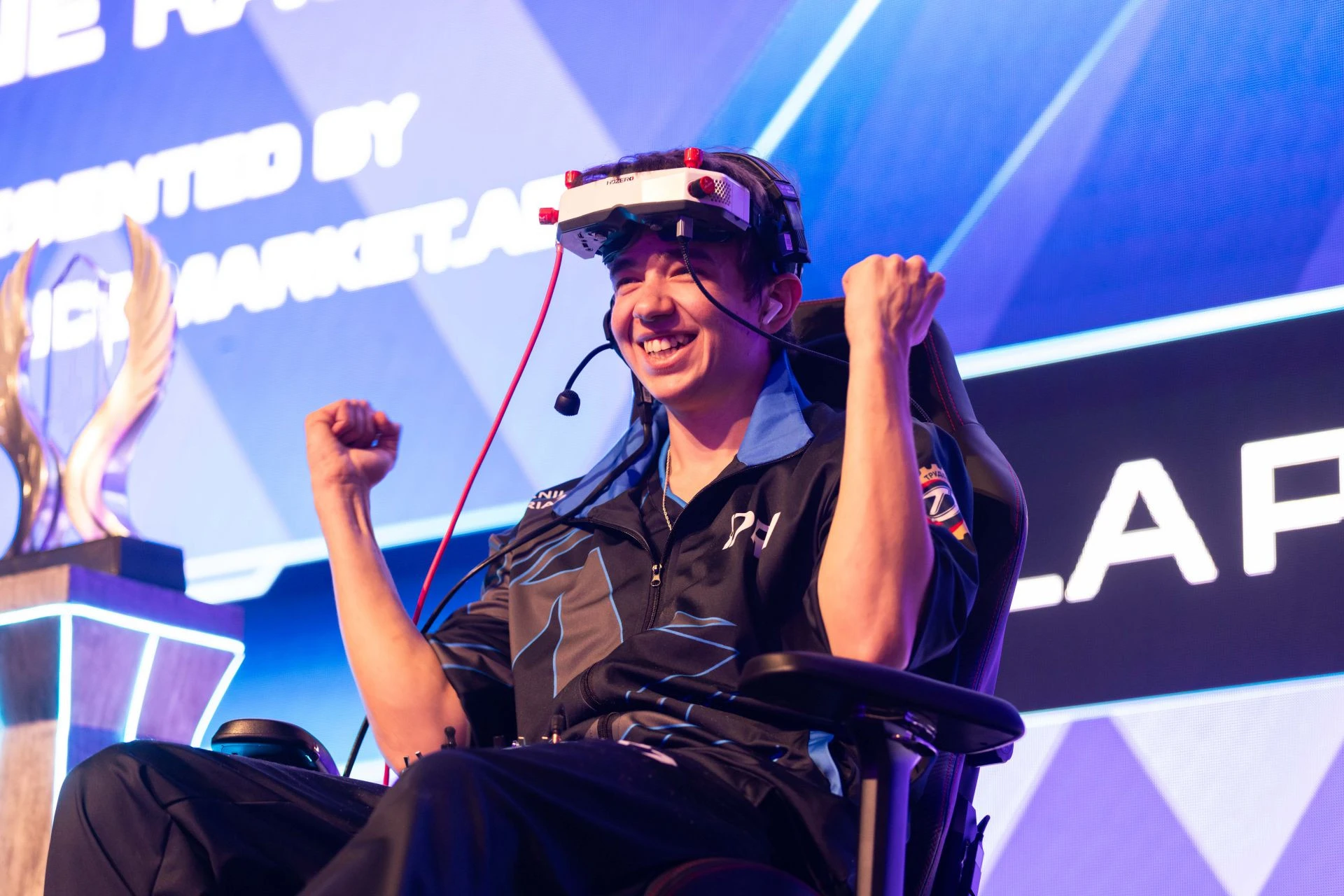







Qualification Stage
In this stage, teams complete a time trial of six laps using a technical simulator running on a PC that mirrors the main stage track. Each club has three attempts to achieve their fastest time.
Each pilot completes 3 laps, one immediately after the after.
The final result is the fastest combined time taken by all club members to complete the virtual track, including pilot changeover time. Once all teams have completed the qualification stage, they are ranked by their fastest time, the fastest club is ranked 1st, and so on.
Main Stage
The Main Stage begins with the quarterfinals, where 4 teams compete in each heat. Heats are organized according to qualification stage rankings.
The top two teams from each quarterfinal advance to the semifinals. Then the top two teams from each semifinal advance to the final.
How winner is decided
The team who is first to complete 50 laps of the circuit in the final is the winner of the competition. The remaining places are decided by the time taken by the remaining competitors to complete the 50 laps. For those participants who do not qualify for the Final, their times in the semi-finals are ranked in quickest time order to provide the rankings for 5th to 8th.
Champions of the Games of the Future Abu Dhabi 2025



Check it out