

FAQ
Phygital sport is a hybrid format that combines physical skill with competitive gaming. In Phygital Football, for example, teams play a round of a football video game, then compete in a 5v5 match on a real pitch. The scores of both rounds are combined, so you need to excel at both to win. Neither pure gaming skill nor pure athletic ability is enough on its own.
The format can be applied to any sport with a video game equivalent – football, basketball, hockey, racing and more – making it one of the fastest-growing new sport formats in the world. Learn more about phygital sport, its origins, governing bodies, and global growth here.
The Games of the Future (GOTF) is an international multi-sport tournament that brings together phygital sports, esports, and tech sports under one roof. It is the world's leading global competition dedicated to disciplines that combine digital and physical performance. The tournament is overseen by Phygital International which owns the rights to the name and which also chooses the host city. The event spans three competition categories:
Phygital sports – hybrid disciplines like Phygital Football and Phygital Basketball, where athletes must compete in both a gaming round and a live athletic match, with both scores counting toward the result
Esports – pure competitive gaming titles including Dota 2 and mobile esports formats
Tech sports – emerging technology-driven competitions such as Drone Racing and Battle of Robots
Each edition brings together elite athletes and competitive gamers from across the world, competing in front of live crowds and a global broadcast audience.
The host city rotates annually. In 2025, the tournament was held in Abu Dhabi, UAE. Games of the Future 2026 took place in Astana, Kazakhstan, from 29 July to 9 August.
Core phygital disciplines – including Phygital Football, Phygital Basketball, Phygital Shooter, and Phygital Dancing – feature at every edition. Additional disciplines vary by year.
GOTF 2026 took place in Astana, Kazakhstan, running from 29 July-9 August 2026. Over 800 athletes from more than 50 countries participated across eight disciplines.
Competition venues included the Barys Arena, Beeline Arena, the Athletics Sports Complex "Qazaqstan", and the Zhaksylyk Ushkempirov Martial Arts Palace. Alongside the main competition, the week included the Phygital Sport Summit – a one-day conference bringing together the biggest names in sport, tech, and gaming.
For news and details of the full tournament schedule, head to the
GOTF Astana 2026 featured eight disciplines across phygital sports and esports:








You can catch up all the all the action via Phygital+ , the official Games of the Future Astana 2026 streaming platform.
Qualification follows a clear pathway, starting with your World Phygital Community (WPC) member:
- Join or register a club – Contact your nearest WPC member (there are 120+ worldwide). They'll connect you with local phygital clubs or help you register your own. Phygital sport isn't nationality-based – you can join a club in any country.
- Compete in Phygital Origins – Local/regional tournaments held each season.
- Advance to Phygital Rivals – These are national-level competition for the best teams from Phygital Origins.
- Global club rankings – After the season, all clubs are ranked globally based on tournament results (see ranking criteria).
- Direct qualification or Phygital Contenders – The top 2–3 clubs (depending on discipline) qualify directly for the Games of the Future. Other high-ranking clubs compete in Phygital Contenders, an international event run by Phygital International (the sport's governing body). Top performers there also qualify.
Want to know more? See the complete qualification pathway explained.
The total confirmed prize pool for Games of the Future (GOTF) 2026 was US$4.65 million, distributed across all eight disciplines. That places GOTF among the largest prize pools in international multi-sport and esports competition.
Prize money was allocated per discipline as follows:
You can find the full schedule and results of each discipline on the official Games of the Future Astana 2026 website .
Esports is pure competitive gaming. Players compete entirely in a digital environment – titles such as League of Legends, Valorant or FIFA esports involve no physical performance component whatsoever.
Phygital sport combines competitive gaming with live athletic competition. In Phygital Football, for example, a team must perform on the controller and then compete in a live 5v5 match on the pitch. Both scores count toward the final result. You cannot win by excelling in only one dimension.
| | Esports | Phygital sport |
| --- | --- | --- |
| Gaming skill required | ✓ | ✓ |
| Physical athletic performance | ✗ | ✓ |
| Combined scoring | ✗ | ✓ |
Phygital sport is designed to find a new kind of athlete – one who competes at the highest level in both the digital and physical arenas. Games of the Future is the first global stage built specifically for that competitor.
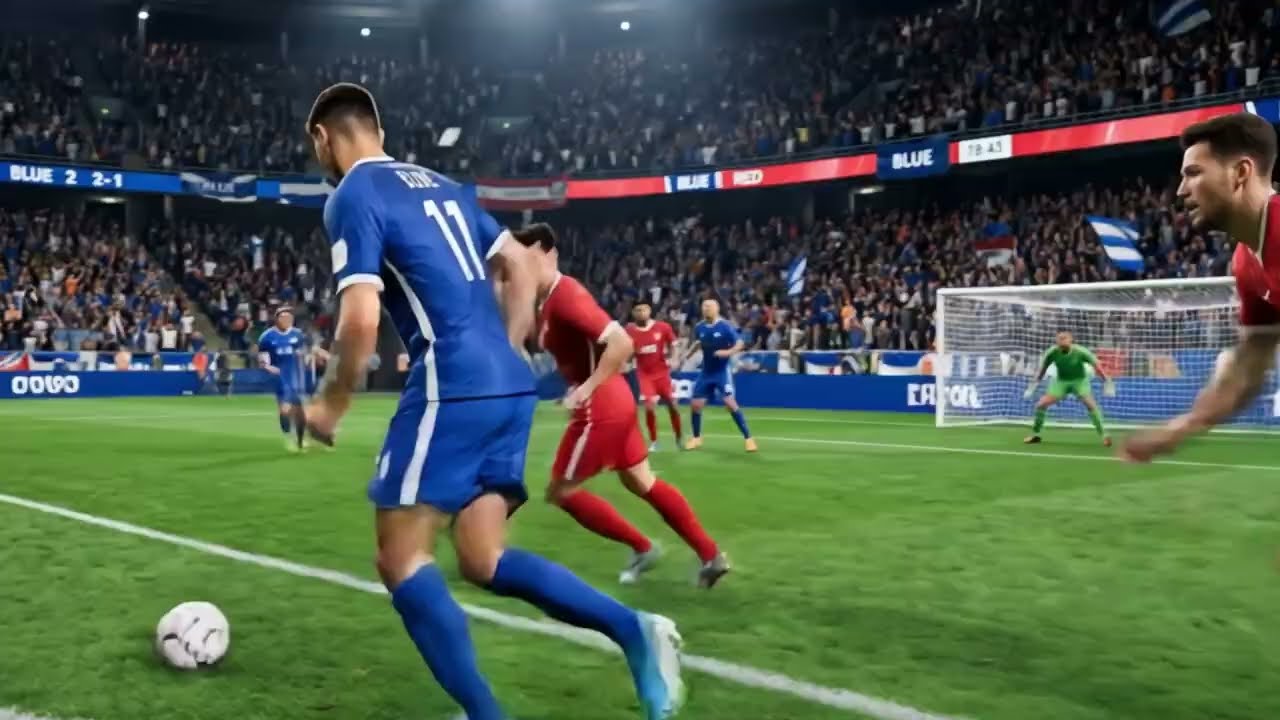
Phygital Football combines a digital video game match and a real 5v5 futsal match into a single tie, with scores from both rounds added together to determine the winner.
The digital round – teams compete head-to-head in UFL. The final score is recorded and carries forward.
The physical round – The same two teams play a 10-minute 5v5 futsal match on a compact pitch.
Both rounds are weighted equally. The combined score decides the winner. For example, a 2-1 digital win combined with a 2-1 physical win produces a 4-2 final score. A team strong in one format but weak in the other can still lose – making balance across both disciplines the decisive factor.
Our
Phygital Football page gives a general overview of Phygital Football rules, including team sizes, substitutions and what happens in a draw. You can also download the full
Phygital Rulebook here here , which gives in-depth details on technical rules for all phygital sports.
During tournament time, you can watch every Games of the Future (GOTF) match live at Phygital+ , the official GOTF streaming platform. It is available globally and, as well as live coverage, there are also highlights and behind-the-scenes access available on demand.
GOTF is also broadcast on television partners in key markets worldwide – partners include Germany-based SportWorld, China’s Huya, Korea’s SOOP, StarTimes in Africa, and Ei Nerd and BIGG in Latin America.
The GOTF Streaming Community is also an important distribution channel – those who sign up get access to the professional-quality broadcast feed and the tools required to deliver a premium viewing experience.
For short-form content, highlights, and behind-the-scenes footage, follow the official Games of the Future channels on
Club registration for Games of the Future competition runs through the World Phygital Community (WPC) – the official global governing body for phygital sport, which represents 120+ member nations and maintains the official world rankings.
Here's how it works:
- Affiliate with your national phygital federation. Every club must first register through a national federation. Remember that any team can join any federation in any country – nationality is not a barrier.
- Register your teams by discipline – the WPC oversees Phygital Football, Phygital Basketball, Phygital Shooter and Phygital Dancing. Once affiliated, you can enter teams across phygital disciplines and gain access to the WPC ranking system.
- Enter Phygital Origins (local/regional tournament) and Phygital Rivals (national-level tournaments). This is the pathway to Games of the Future – open to clubs of every size, from grassroots community teams to established esports organizations.
Ready to get started? Find a full list of WPC members in the Members’ Catalog, get in touch with a federation and kick off your phygital career today.

The Games of the Future (GOTF) is run by Phygital International — the organization created to turn phygital sport into a global phenomenon. Phygital International sets the rules, manages the overall phygital competition structure, and chooses the host city for each edition of the Games of the Future.
The road to GOTF starts with the World Phygital Community (WPC), which runs the phygital qualification pathway in countries around the world. WPC members organize Phygital Origins tournaments at local/regional level, and winners qualify for national-level Phygital Rivals competitions. Results from both contribute to a global phygital ranking.
From there, the top-ranked teams qualify directly for the Games of the Future. The next group aren't out — they enter Phygital Contenders , a last-chance tournament also run by Phygital International, where international teams battle each other for the remaining GOTF spots.
So, whether you make it straight through or do it the hard way – all roads lead to GOTF.
Athletes from more than 60 countries competed at Games of the Future 2025 in the UAE, with over 850 participants taking part. Games of the Future 2026 featured over 50 nationalities and 800+ participants.
Each year, host cities put out a call for volunteers who want to get involved with Games of the Future, and the process differs slightly each time. However, the way the GOTF 2026 Volunteer Program in Astana worked will give you a good sense of what to expect if you want to take part in future.
Volunteers were recruited across four role types:
- Service Line – logistics and crowd support
- Protocol – guest and delegation liaison
- Competition Venue – sports and esports operations
- Team Leaders – on-ground coordination
Requirements were: - Aged 16+
- B2 English or higher
- Reliable and available for pre-Games training
- Able to arrange your own transport/accommodation in Astana
No prior experience was needed. In return, volunteers received an official uniform, meals on shift days, full training, accreditation, and a CV-ready certificate. Follow us to be notified when applications open for future Games of the Future events.
Phygital sport is exploding, and the numbers back it up. According to the Phygital Sports Market Report 2026, the global phygital sports market is worth US$2.1–2.7 billion right now (2025–2026) and is projected to hit $7 billion by 2030 – a 27% annual growth rate, faster than most traditional sports or standalone esports.
The final result is a combination of two scores – the digital round score and the physical round score – added together.